Keeping New York City moving with AI-driven predictive track maintenance

The scope: The extensive MTA network and maintenance plans that keep NYC moving
The New York City subway system moves millions of riders every day. Maintaining the tracks to ensure safe and reliable service is a monumental task. Historically, track inspectors have had to walk two to three miles a night in dimly lit tunnels on elevated structures. It is a demanding job requiring crews to navigate hazards while carrying a 292-page inspection manual, all while 24/7 train service continues around them.
To make this vital work safer and more efficient, the Metropolitan Transportation Authority (MTA) partnered with Google Public Sector to develop an innovative pilot program called TrackInspect.

By being able to detect early defects in the rails, it saves not just money but also time –for both crew members and riders. This innovative program – which is the first of its kind – uses AI technology to not only make the ride smoother for customers but also make track inspector's jobs safer by equipping them with more advanced
tools.
Demetrius Crichlow,
President, New York City Transit
The pilot: The training of Google Pixels to identify maintenance issues
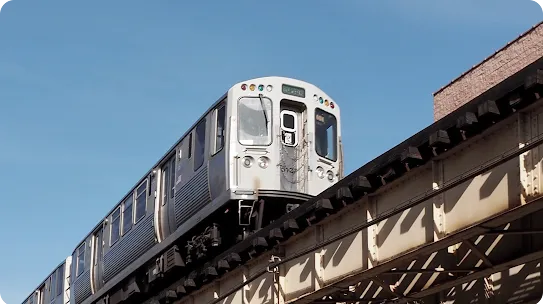
Developed in collaboration with the Rapid Innovation Team at Google Public Sector, the TrackInspect prototype is designed to proactively detect potential track defects before they escalate into service-disrupting operational issues. The program retrofitted standard Google Pixel smartphones onto R46 subway cars on the A line. As the trains move, these Pixel devices capture millions of subtle vibrations and sound patterns through built-in sensors and microphones.
This sound and vibration data is transmitted in real time to cloud-based systems, where artificial intelligence and machine learning algorithms generate predictive maintenance insights. New York City Transit (NYCT) track inspectors then serve as the “humans in the loop.” They review the specific locations highlighted by the system and physically confirm whether an issue exists, providing feedback that continuously trains and improves the model.
To further assist inspectors, TrackInspect utilizes Generative AI for natural language processing. Instead of manually searching through extensive physical manuals, inspectors can now ask conversational questions about maintenance history, protocols, and repair standards, receiving clear and immediate answers.
The TrackInspect pilot is a game-changer for the MTA, combining advanced cloud, AI, and Pixel real-time sensor technology to transform how we maintain and monitor our subway infrastructure. It reflects our commitment to uniting technology and operations to drive innovation and safety.
Raf Portnoy,
Chief Technology Officer, MTA
The results: Millions of readings collected to identify defect locations
In its initial pilot phase, the TrackInspect prototype collected 335 million sensor readings, one million GPS locations, and 1,200 hours of audio. It successfully identified 92 percent of the defect locations found by human track inspectors.
By investing in predictive maintenance and AI-driven solutions, the MTA is taking a major step towards modernizing its operations. Finding and diagnosing track issues faster means fewer train delays, a smoother ride for millions of daily passengers, and a safer, more equipped environment for the dedicated crews maintaining the rails.
Explore more Public Sector case studies and solutions

GENERATIVE AI
City of Los Angeles partners with Google to power city operations and enhance employee productivity

DATA ANALYTICS & AI / ML
Connecting residents with high-quality, affordable healthcare at unprecedented speed
GENERATIVE AI
Chicago Transit Authority connects with city: AI chatbot bridges language barriers and empowers riders